
Article contents
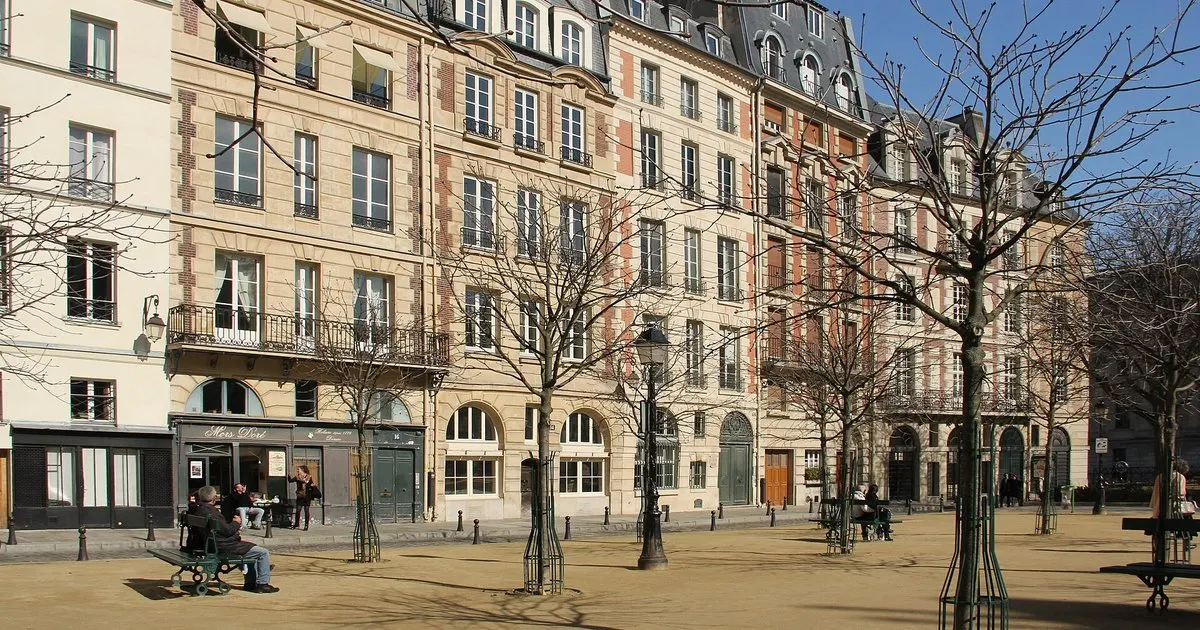
Renting out a flat in the 1st arrondissement to visitors means offering an address the whole world knows: the Louvre at the end of the street, the Tuileries a few minutes away, place Dauphine at the tip of the Île de la Cité. It also means entering the most tightly regulated part of Paris. Before talking about photos, prices or cleaning, an owner in the 1st has to answer two simple questions. Everything else follows from them.
This article sums up the City of Paris rules as we read them in the official texts. It does not replace legal advice or a check with the city authorities, but it keeps you from heading in the wrong direction.
First question: is the flat your main home?
The Paris rules draw a sharp line between two situations. If you rent out the home you live in for most of the year, you are in the simplest case: you can offer it as furnished tourist accommodation while you are away, within an annual limit set by the City. If the flat is not your main home, whether it is a pied-à-terre, an inherited property or an investment, the framework changes completely.
In the 1st, the question comes up often. Many flats in the area belong to owners who live elsewhere, in other French regions or abroad, and who use them a few weeks a year. That is precisely the profile the Paris rules target most.
The registration number, in every case
Whatever your situation, renting furnished tourist accommodation in Paris starts with a declaration to the City, which issues a registration number. That number must appear on every one of your listings, on every platform where the flat is offered. It is the first thing we check before any multi-platform listing: a listing without a number has no place online.
Main home: an annual cap to keep an eye on
For a main home, the City of Paris has limited furnished tourist rentals to 90 days a year since 1 January 2025, down from 120 before. It relies on the law of 19 November 2024, which lets municipalities with strong tourist demand tighten the rules. Source: City of Paris, page « Location limitée à 90 jours : Paris serre la vis sur les meublés touristiques », on paris.fr.
In practice, the issue is no longer permission but the calendar. You have to choose the periods when the flat is offered, block the other dates and keep count of the nights booked across all platforms. It is more about monitoring than paperwork. When you hand your flat over to us, that count is part of what we track with you, platform by platform.
Second home: change of use with compensation
For a flat that is not your main home, renting it as furnished tourist accommodation requires a change-of-use authorisation. In Paris, that authorisation is granted in exchange for compensation: premises that had another use must be turned into housing, so that the city’s housing stock does not shrink. The framework is set by the municipal regulation on changes of use.
That regulation sets two requirements that weigh heavily in the 1st.
Compensation in the same administrative quarter
Article 3 of the regulation requires the compensation to be offered in the same administrative quarter as the converted flat. The 1st arrondissement has four administrative quarters: Saint-Germain-l’Auxerrois, les Halles, Palais-Royal and Place-Vendôme. A flat near the Palais-Royal therefore cannot be offset with premises towards Les Halles, even though both addresses are in the same arrondissement.
Three times the floor area
The same article provides that, in the arrondissements shown on the map in Annex 6 of the regulation, the premises offered as compensation must cover three times the floor area converted. The 1st to 9th arrondissements are all on that map. For a flat in the 1st, compensation is therefore three for one.
Article 2 specifies which premises qualify: they must create genuine housing units, meet decent-housing standards, not have been used for another compensation, and not be an extension of an existing home.
Source: City of Paris, municipal regulation on changes of use, deliberation 2025 DLH 44, consolidated version of 3 March 2025, articles 2 and 3 and Annex 6 (PDF on paris.fr).
What this means for an owner in the 1st
For most private owners, three-for-one compensation in the same administrative quarter is out of reach: it requires shops or offices to convert, right next to your own flat. If your property in the 1st is a second home and does not already hold a change-of-use authorisation, it is better to know straight away than to discover the problem after going live.
On the other hand, if you live in your flat and travel regularly, short-term renting remains a realistic option. The annual cap simply means choosing your periods with care. In an area where demand hardly drops from one season to the next, as we explain in our article on seasonality in the 1st, placing your nights well matters as much as renting them.
How we work
From the very first conversation, Laura and Hannah ask you the two questions that decide everything: is the flat your main home, and do you already hold a change-of-use authorisation? Depending on the answer, we explain what is possible, without promises the rules would not let us keep.
When renting is possible, our support for owners builds these rules into day-to-day work: registration number on every listing, calendar tracked across all platforms, check-in and check-out organised with respect for the building. The digital welcome book also reminds guests of the building’s customs, so that the rental goes smoothly with the neighbours.
To check on paris.fr before any commitment
The annual cap, the Annex 6 perimeter and the compensation conditions come from municipal deliberations and the law: they can change. The Annex 6 map is a map, not a list of addresses. Before signing, buying or putting a flat online, check the rules in force on paris.fr and have your situation confirmed by the City of Paris housing department (Direction du logement et de l’habitat).
Want to know what your flat could earn within the permitted framework? Estimate your income in a few clicks, then let’s talk.
Frequently asked questions
Do I need a registration number to rent out a flat in the 1st on a short-term basis?
Yes. In Paris, furnished tourist rentals start with a declaration to the City, which issues a registration number to show on every listing.
How many nights can a main home be rented out in Paris?
Since 1 January 2025, the City of Paris has limited furnished tourist rentals of a main home to 90 days a year, under the law of 19 November 2024. Check the current rules on paris.fr.
Can a second home in the 1st arrondissement be rented short-term?
It needs a change-of-use authorisation with compensation. In the 1st, compensation is three for one and must be offered in the same administrative quarter, under the municipal regulation on changes of use (deliberation 2025 DLH 44).
What are the administrative quarters of the 1st arrondissement?
Saint-Germain-l’Auxerrois, les Halles, Palais-Royal and Place-Vendôme. Compensation for a change of use is assessed at that level.
Photo: Ana Paula Hirama, CC BY-SA 2.0, via Wikimedia Commons
How much could your property earn?
An estimate of your short-term rental income, based on your address.
Estimate my incomeRead next